Kokanee Salmon are a fresh water derivative of the Sockeye Salmon that hold in 50-56 degree water. They have an arctic bluish green back with silver side and whitish bellies. They primarily feed on plankton and will attack lures to protect their food source.
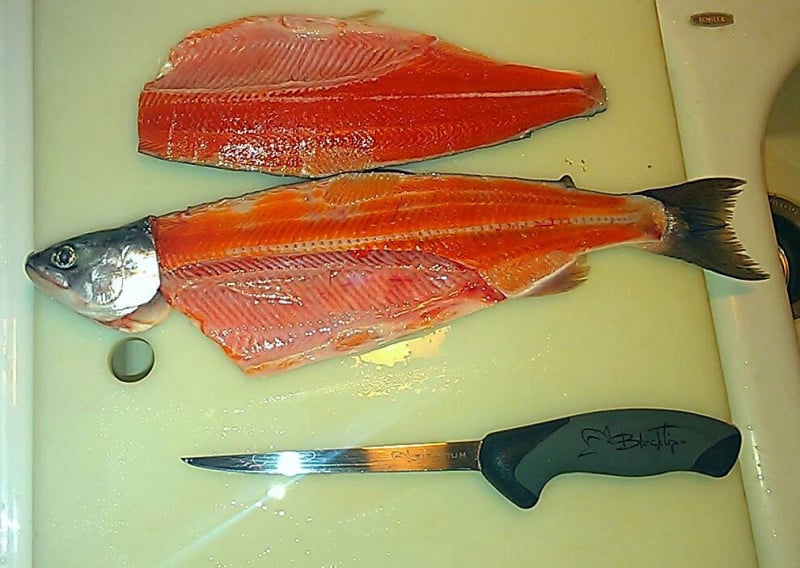
Kokanee Salmon are aggressive striking, hard-fighting aerobatic speed demons. Once hooked these powerful fish are a challenge for even the most skilled angler because of their soft mouth. With a landing ratio of 50%-80% for most anglers, these trips are alot of fun for all ages. The table fare of the Kokanee Salmon baked, grilled or smoked is comparable to the same quality of Fresh Sockeye Salmon from Alaska.
Kokanee Salmon will be bright chrome until about August of their third year of life. Around the first week of August is when they start getting pinkish-gray, the scales begin disappearing and they really put up a great fight. By the end of August they start turning red as they stop eating and school together getting ready to spawn.
Kokanee become very territorial by mid August and will attack just about anything that comes too close to them. Kokanee Salmon are planted as fingerling every year to grow for two to three years in the lake before they are caught or spawn and die. Shaver Lake average sizes during season: April-May 13"-16" 1-1.5lbs, June 15"-17" 1.5-2.25lbs , July 16"-18" 1.5-2.5lbs August 16.5"-19" 1.75-3lbs.
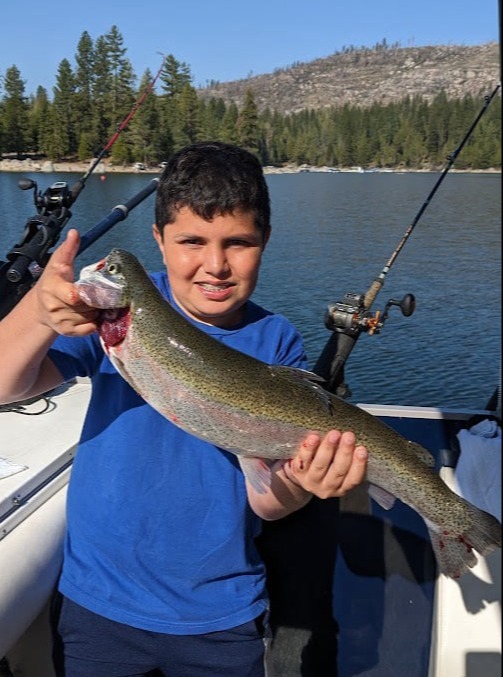
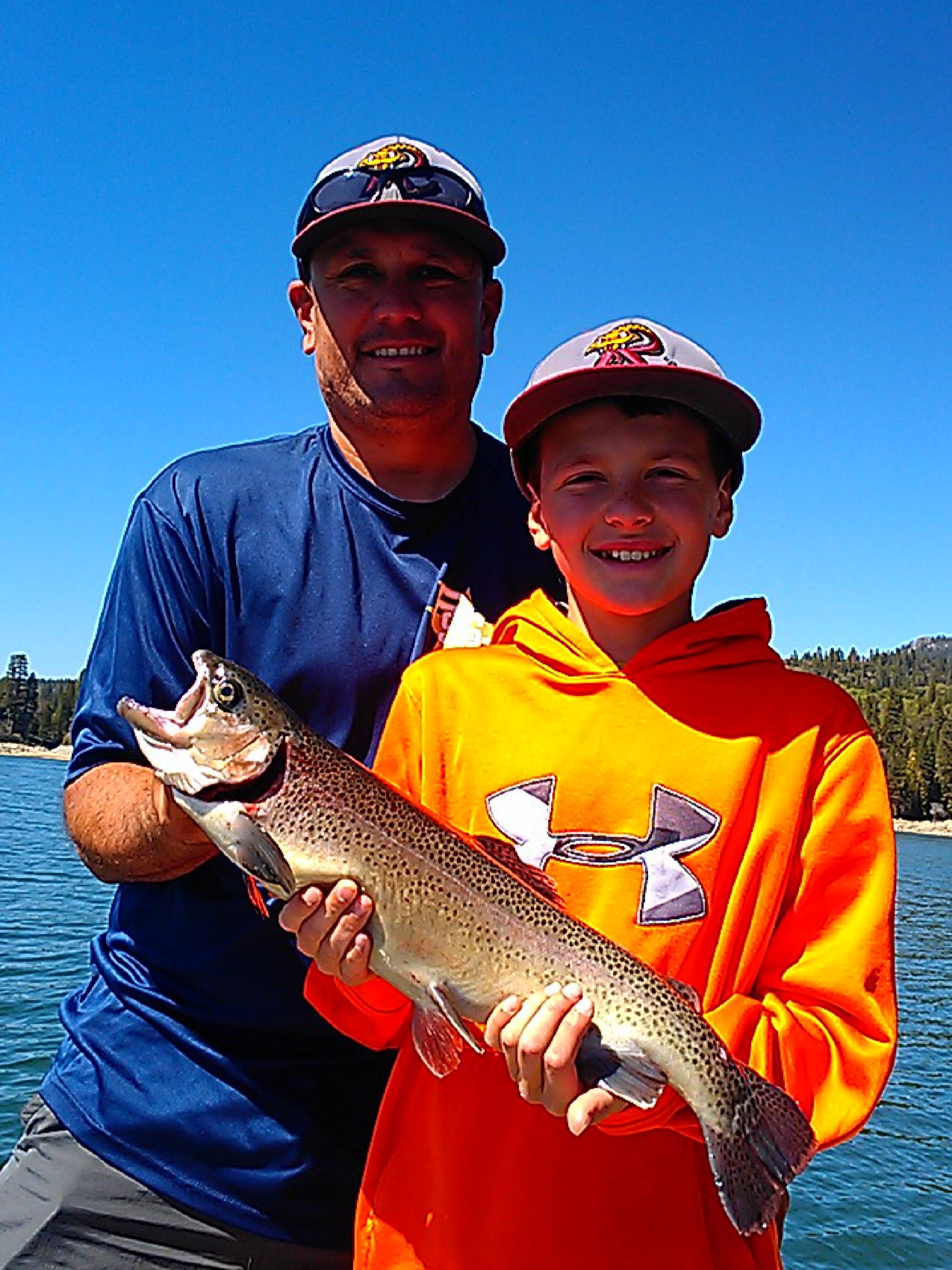
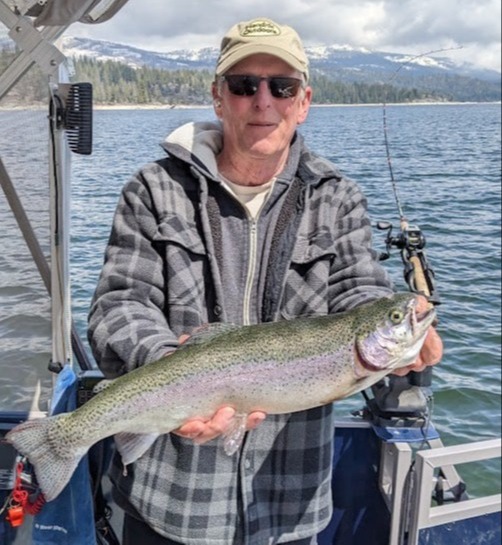
Rainbow Trout that we catch can range from a half pound 12 inch to a 24" 5+ pound Trophy Trout! While we do target the salmon most of the season, we do get some nice rainbows too. They are more common in the early part of the season and maybe targeted the first couple monthes of the year..

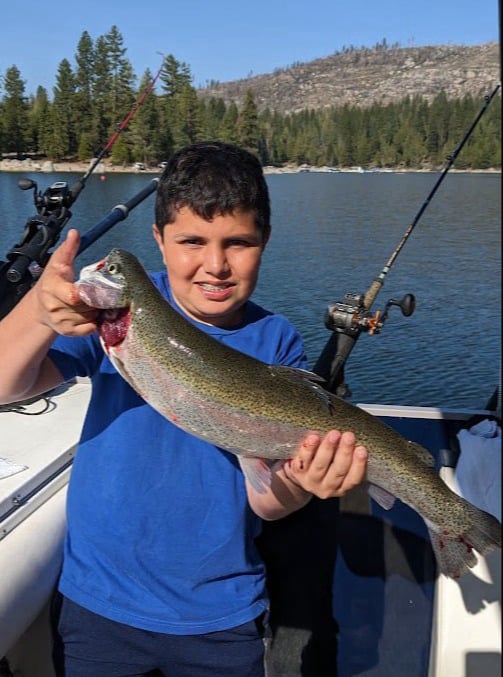
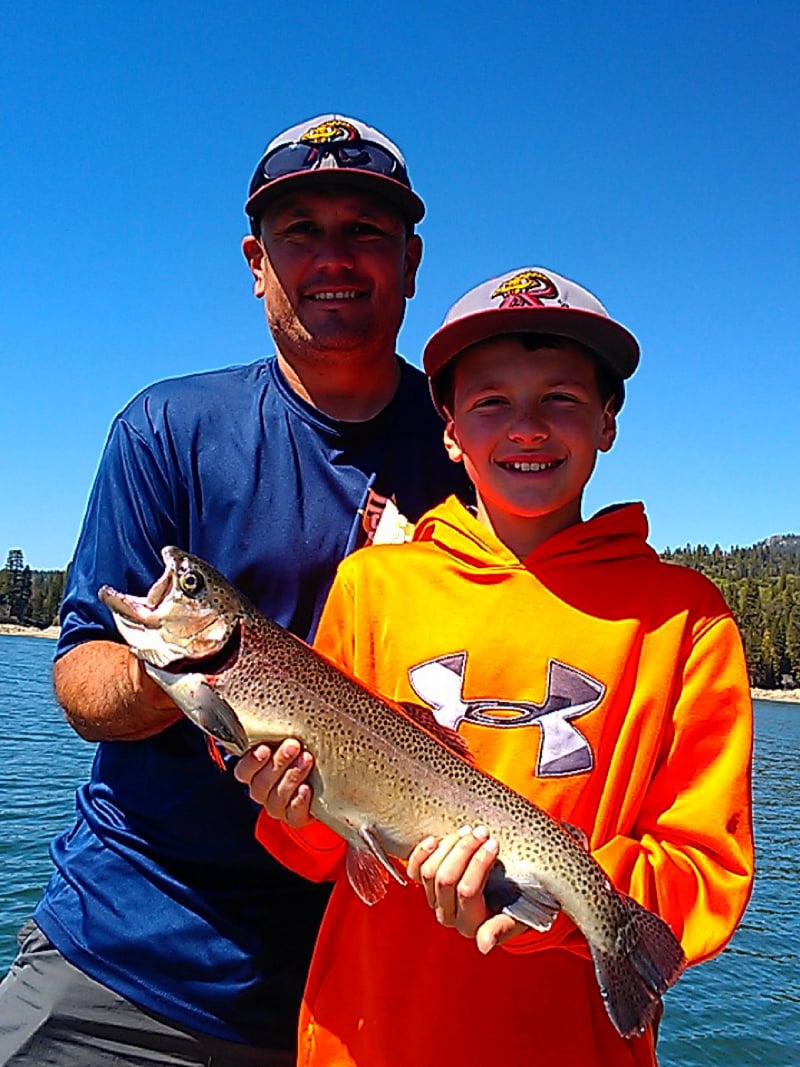

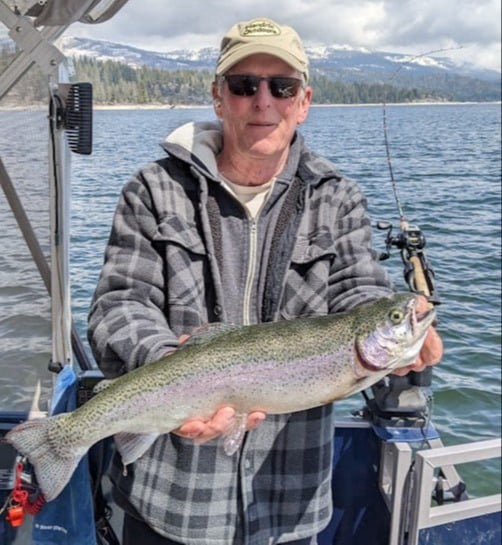

The Brown Trout (Salmo trutta) is a popular, non-native game fish that was introduced to California in 1893. They are known as a challenging adversary for anglers, often growing to trophy size in larger rivers and reservoirs. Brown trout fingerlings were planted by the CDFW, in April 2019. CDFW does stock brown trout in Shaver Lake, though it's often not as frequent as the rainbow trout stocking. CDFW stocks brown trout almost yearly as part of an effort to re-establish a thriving population in the lake. However, fishing reports confirm that the brown trout population is being maintained and is producing impressive fish like the 16.15 pound Brown in the photo caught with Todd May of 2025. A massive brown trout was caught just the week before shattering the Shaver Lake record at 24.48 pounds
Initial Plant: In early 2019, CDFW planted 50,000 Golden Trout sub-catchables (5 to 9 inches) in Shaver Lake.
This was noted as one of the first times CDFW had planted Golden Trout in a mid-elevation lake like Shaver, as they typically stock them in higher, remote Sierra lakes via plane.
Golden trout (Oncorhynchus aguabonita) are famously finicky and sensitive; they require the cold, pristine, high-oxygen conditions of high-altitude alpine environments (typically above 8,500–10,000 feet) and struggle significantly with the warmer water temperatures, lower oxygen levels, and competition/predation found in mid-elevation reservoirs like Shaver. Yet, we are still catching a few each year including 2026 at 14 to 15.5 inches.

Why Long-Term Survival is Unlikely:
Because golden trout are nearing the absolute end of their natural 6-to-7-year lifespan from that original 2019 plant, seeing them on the decks is getting increasingly sparse. With no additional plants scheduled for Shaver Lake, the few 14 to 15.5-inch fish still showing up are likely the result of a slight chance of natural holdover, offspring, or a very slight chance of a washdown through the tunnels from the high-country lakes above.
Genetic Dilution in the Spring Spawn:
Even when a few holdover golden trout successfully ascend Shaver’s tributaries to spawn in the spring, they share the exact same spawning window and gravel beds as the lake's heavy population of rainbow trout. Because the two species readily crossbreed, any surviving fry are quickly absorbed into the dominant rainbow gene pool over the years—meaning natural genetic dilution will eventually filter pure golden trout characteristics out of the lake entirely.